Restaurant, Cafe and Bar Signage: Lighting, Materials and Layout
Key takeaways
- Exterior: warm white 3,000 K front-lit or halo letters, sized for the approach distance
- Interior: neon or halo lighting at low brightness, because diners sit close to it
- Menus and boards: light boxes with replaceable faces, so seasonal changes are cheap
- Kitchen-adjacent signage needs wipe-clean finishes and sealed cable entries
Food and drink businesses use more signage than any other trade: a fascia sign, a window sign, a menu board, interior branding and often a second sign for a terrace. Each one is read in different light. This guide covers what we build for restaurants, cafes and bars, and why.
Related reading: neon signs for bars, salons and events · custom neon light signs · which sign suits your business type · request a hospitality signage quote
The exterior sign
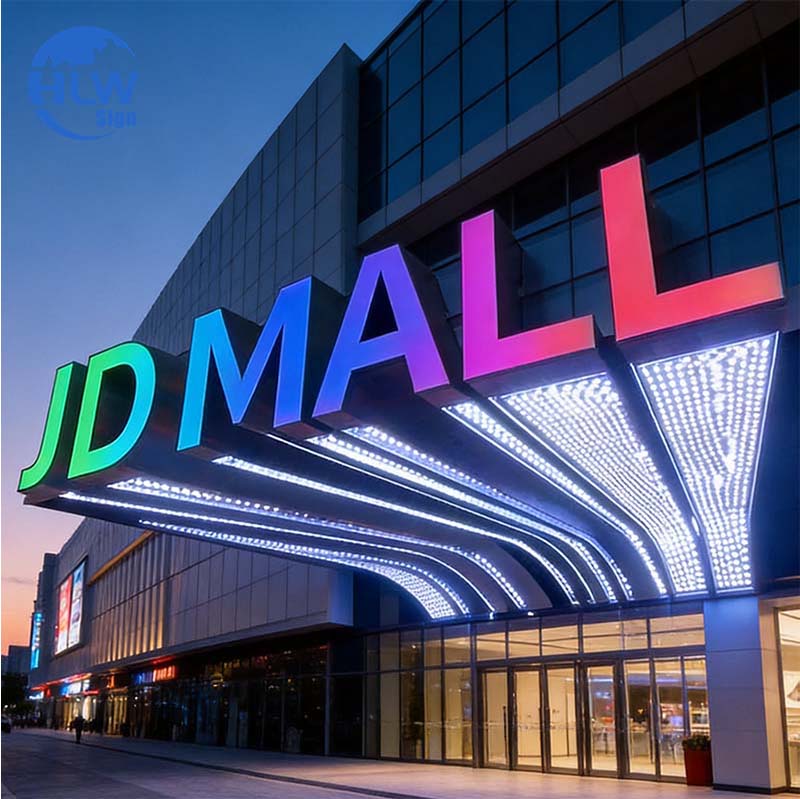
- Front-lit channel letters where the sign must be legible from across the road
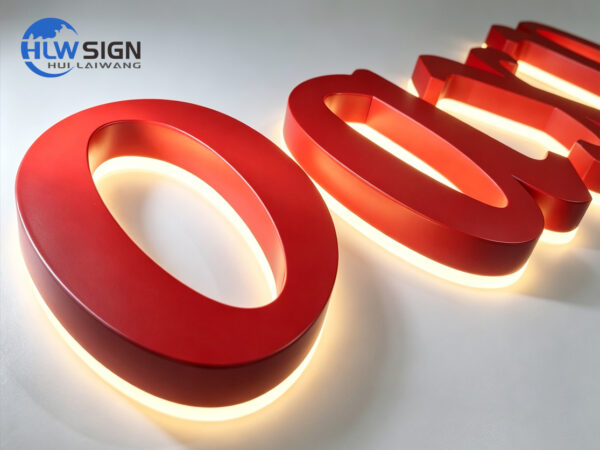
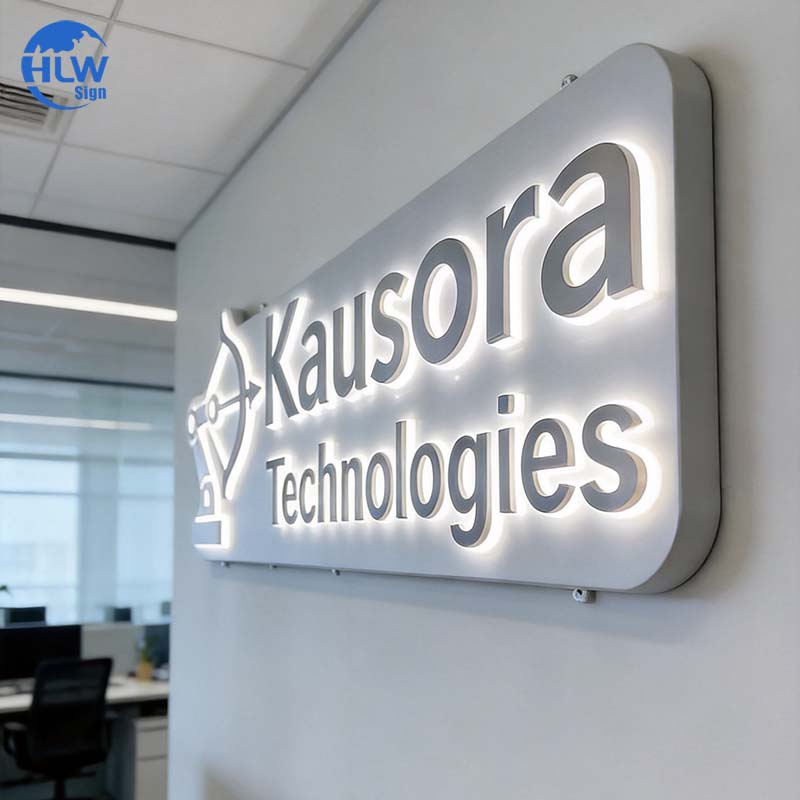
- Backlit (halo) letters where the character should be warm rather than loud
- Baked enamel finishes for saturated brand colours that hold up outdoors
- 3,000 K colour temperature — the warm white that suits hospitality
- Timers so the sign switches off after closing rather than staying lit all night
Windows, menus and interior branding
| Sign | Construction | Note |
|---|---|---|
| Window graphic | Vinyl on glass, or a slim edge-lit box | Cheap to change for seasonal offers |
| Menu board | Backlit light box with a replaceable face | Update prices without rebuilding the sign |
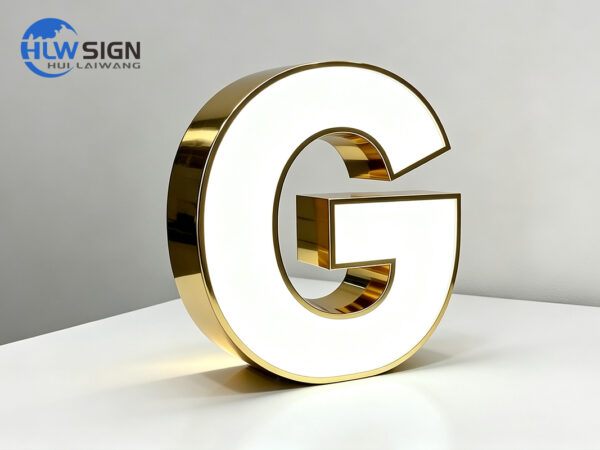
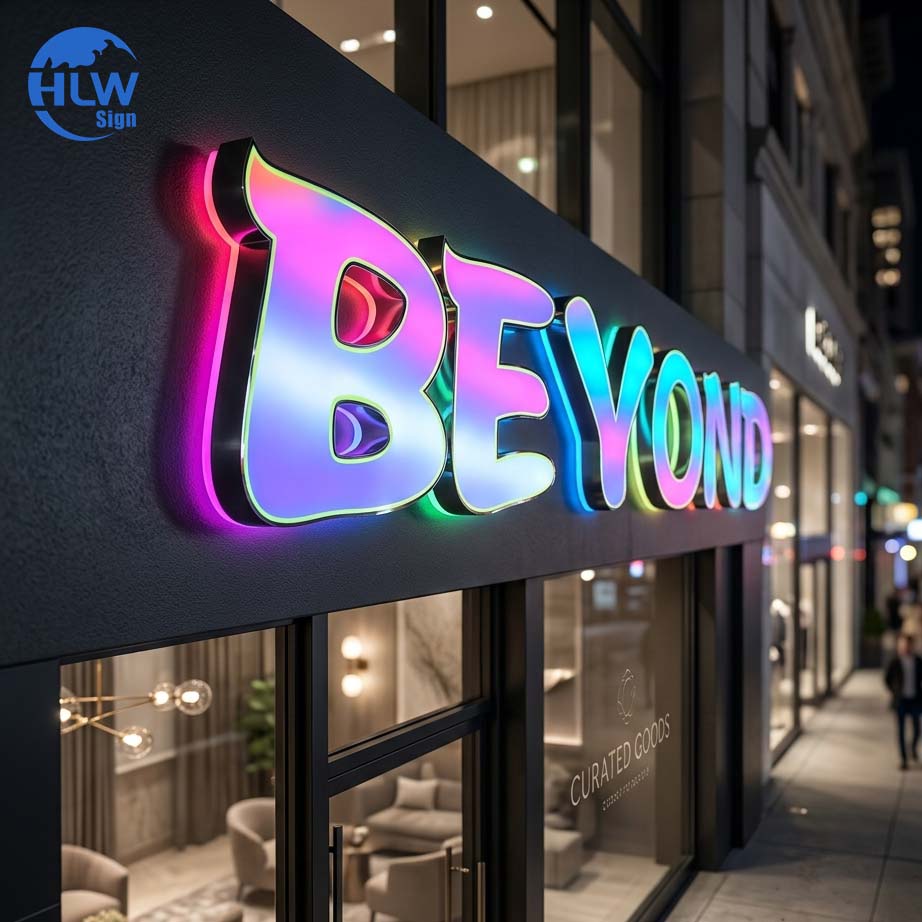
| Interior brand wall | Neon, halo letters or dimensional letters | This is the surface customers photograph |
| Directional signs | Acrylic or brushed stainless plates | Toilets, terrace, private dining |
| Terrace or garden sign | Weather-resistant halo or neon | Check the fixing: fencing and pergolas are not walls |
Materials that survive a kitchen
- Powder-coated or baked enamel finishes wipe clean and resist greasy air
- Sealed cable entries: warm, greasy air finds its way into poorly sealed fittings
- Brushed stainless rather than mirror finishes for anything within touching distance
- IP65 or better for signage on a terrace or in a covered outdoor area
- Replaceable acrylic faces in menu boxes, so staining does not write off the frame
Send photos of the facade and the interior wall with approximate sizes, and tell us the atmosphere you are aiming for. We will propose an exterior and interior pairing rather than quoting one sign in isolation.
Conclusion
Hospitality signage has to work at two distances and two brightness levels: bright enough to be found from the street, gentle enough to sit above a table. Warm white outside, low-brightness neon or halo inside, and replaceable faces for anything that changes with the menu.
Frequently asked questions
What lighting colour suits a restaurant sign?
3,000 K warm white is the standard for hospitality, because it flatters both the brand and the food. Cooler white suits fast-food and forecourt retail, where the sign needs to read as bright and quick.
Can menu boards be updated without replacing the sign?
Yes. A backlit light box keeps the frame and the electronics and only the acrylic face is replaced, so prices and seasonal menus can be updated cheaply.
What about a sign for an outdoor terrace?
Use halo or neon letters with IP65 or better sealing, and check the fixing surface — fencing and pergolas need brackets rather than wall fixings. We can supply the mounting hardware with the sign.
Sources and further reading
- Storefront — Wikipedia — Frontage design context for hospitality venues.
- Neon sign — Wikipedia — History and construction of neon signage.
- Color temperature — Wikipedia — Warm versus cool lighting in interiors.
- IP code — Wikipedia — Weatherproofing for terrace and outdoor signage.
External links above point to independent reference material. We are not responsible for the content of external sites.