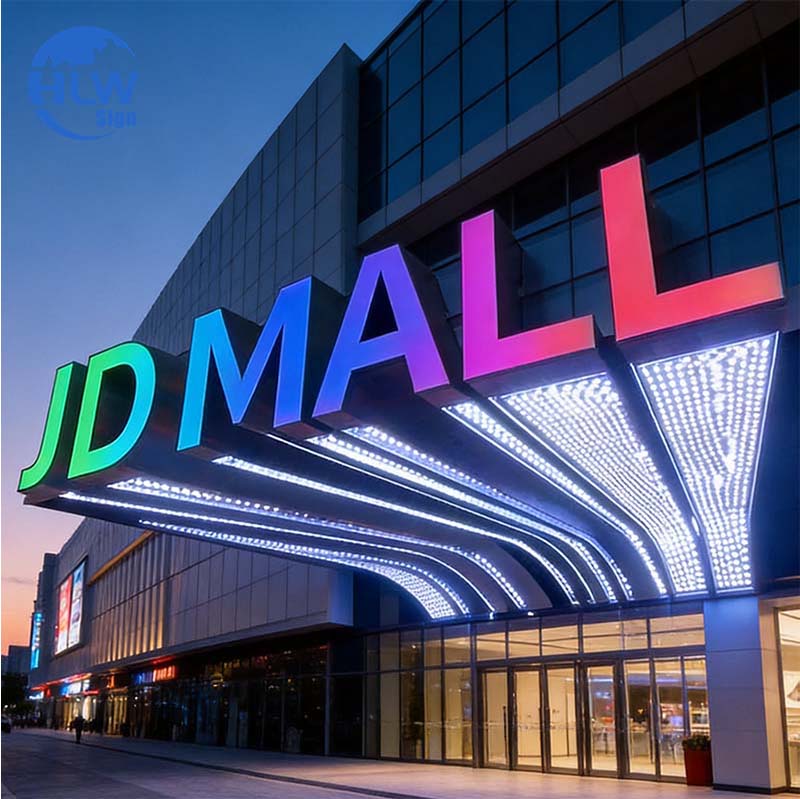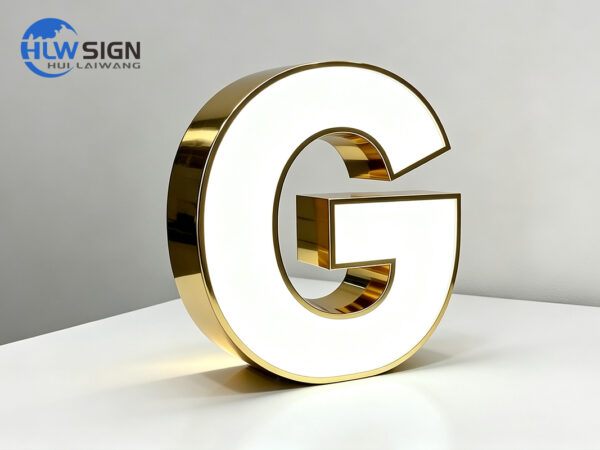

Sign Permits, Landlord Approvals and Heritage Facades: What to Prepare
Key takeaways
- Start with the landlord's design guide and the local signage rules before you draw anything.
- Most applications are decided on size, illumination, projection and fixing method.
- Produce a site elevation with the sign drawn to scale; a photo mock-up alone is rarely accepted.
- On heritage buildings, non-illuminated metal letters and discreet halo lighting are usually approvable.
Every signage project has two approval paths: the landlord, who owns the building, and the local authority, which regulates what appears on the street. Both ask for the same information, and both are easier to satisfy before the drawings are finalised. Here is how we help customers prepare.
Related reading: non-illuminated metal signage · heritage-friendly 3D letters · reverse channel letters and halo lighting · ask us for application drawings
What applications are decided on
- Size: letter height, total sign width and illuminated area
- Illumination: whether the sign lights up, at what brightness, and during which hours
- Projection: how far the sign stands off the wall or over the pavement
- Fixing: where the wall is drilled, and how the surface is made good if the sign is removed
- Appearance: material, colour and how the sign sits with neighbouring frontages
The documents worth preparing
- A site elevation with the sign drawn to scale in place
- The sign drawing: letter heights, depth, material, finish and mounting method
- A specification note covering the LED components, brightness and any controls such as a timer
- A photo mock-up showing the facade with the sign in daylight and at night
- For heritage buildings, a statement of why the construction respects the facade
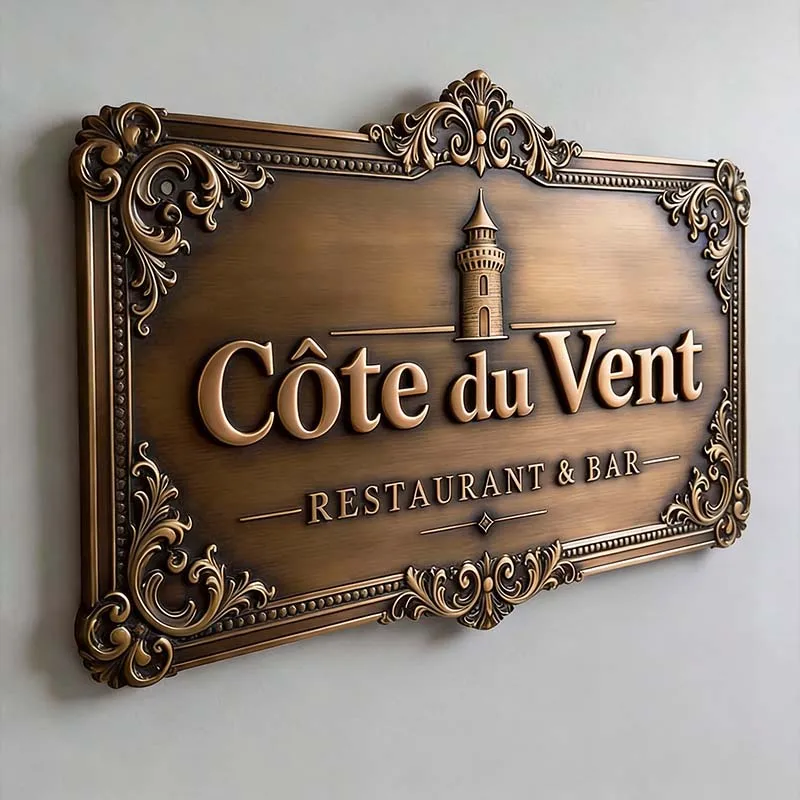
Designing around a restricted building
- Non-illuminated metal letters with a brushed or painted finish, fixed with concealed studs
- Discreet halo (backlit) letters, where the light washes the wall rather than shining outwards
- Signs mounted on an existing rail or a sub-frame, where drilling the original facade is not permitted
- Internally illuminated signs placed inside a window instead of on the facade
- Timers and dimming to keep late-night light spill acceptable to neighbours
We supply drawings, specifications and component details you can submit with an application, and we can draw the design in two or three constructions so you have an approvable fallback.
Timing the project
- Confirm the landlord's design guide and any local restrictions first
- Design and agree the drawing before applying, so nothing changes mid-application
- Apply, then use the waiting time to confirm production and freight details
- Manufacture on approval: standard production is 7–15 working days after the drawings are signed off
- Book installation and any access equipment before the crate lands, not after
Conclusion
Permissions are a design constraint, not an obstacle. Read the landlord's guide, prepare a scaled elevation and a specification, and design a second, non-illuminated version as a fallback. That way approval delays cost you time rather than a redrawn project.
Frequently asked questions
Do I need permission for an illuminated shop sign?
Requirements vary by location and by landlord, and illuminated signage is usually regulated more tightly than non-illuminated. We supply the drawings and specifications you submit, and can design a non-illuminated version if illumination is refused.
What can I do if my building is listed?
Non-illuminated metal letters with concealed fixings are the usual solution, sometimes combined with discreet halo lighting. Where the facade cannot be drilled, we design a sub-frame or rail so the sign remains reversible.
Can you supply drawings for a planning application?
Yes. Every order includes dimensioned drawings, and we can provide a scaled elevation plus a specification note covering materials, illumination and mounting for your application.
Sources and further reading
- Building permit — Wikipedia — Background on the approval process.
- Listed building — Wikipedia — Why heritage facades restrict signage.
- Facade — Wikipedia — Building facade context for sign placement.
- International Sign Association (ISA) — Industry guidance on compliant signage.
External links above point to independent reference material. We are not responsible for the content of external sites.