Pylon and Gas Station Signs: Specifying a Roadside Sign That Lasts
Key takeaways
- A pylon sign is a freestanding structure: structure first, branding panels second.
- Height and width are set by sightlines and local regulations, not by the artwork.
- Fuel price displays, service information and illuminated branding are separate systems inside one cabinet.
- Modular sections keep transport, on-site assembly and future maintenance practical.
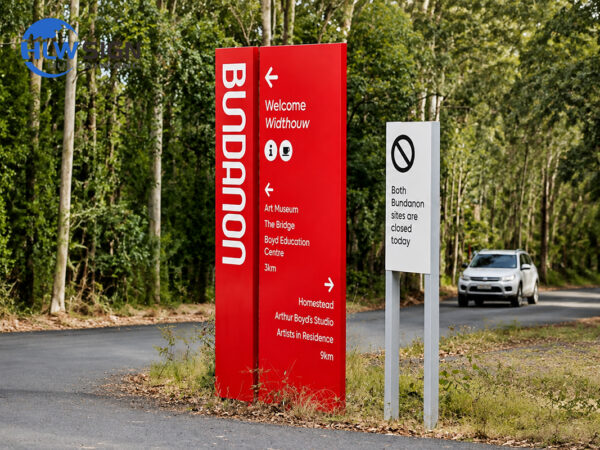
Pylon signage is the most engineering-heavy work we do. Unlike a shopfront letter, a pylon sign has to stand up on its own, carry its own wind load, and stay legible from a moving vehicle at 60 metres. That changes what matters in the specification. This guide walks through the decisions in the order we normally take them with a client.
Related reading: custom pylon signs and pylon signage · gas station pylon sign with price displays · illuminated logo and light box panels · channel letters for building signage
Start with sightlines and regulations
The first question is not the design, it is how far away the sign has to be read and what the site allows. A gas station pylon has to communicate before a driver commits to a lane; a hotel or business park sign can afford to be read from the entrance.
- Approach speed and distance determine the minimum letter height on each panel
- Local regulations may cap total height and illuminated area — check before design, not after
- Cabinet depth is usually 150–400 mm, depending on the overall dimensions and internal structure
- The structure has to be sized for the worst local wind load, not the average
What goes inside the cabinet
Structure
Galvanised steel or aluminium framework with anti-corrosion treatment, welded and sized to the panel layout. Internal framework is typically supplied with reinforced base plates and anchor bolts, and large pylons are built in modular sections so they can be transported and assembled on site.
Panels and finishes
- Aluminium composite panels 3–4 mm for large flat areas
- Aluminium sheet 1.0–3.0 mm where a sharper edge is wanted
- Acrylic or polycarbonate faces 3–10 mm for illuminated sections
- Outdoor powder coating, spray painting, UV printing or vinyl graphics for the graphics layer
Lighting and displays
- Internal LED illumination with IP65/IP67 waterproof modules
- LED digital price modules for fuel pricing, or interchangeable number panels where price changes are infrequent
- Remote, wired, wireless or app-based control for price displays
- Front-lit branding, backlit logo panels and non-illuminated reflective graphics can be combined in one structure
Foundation, installation and the part most people underestimate
A pylon sign is installed on a concrete foundation using anchor bolts or embedded steel components. That foundation is engineered locally, by an engineer who knows the ground and the wind zone — so the drawing we supply is only half of the installation.
- We supply the structure, illuminated cabinets, mounting components, LED modules and power supplies
- Local engineering covers the foundation, the anchor bolts and the final wind-load check
- Modular sections reduce crane time on site and make future panel replacement possible
- Access for maintenance should be planned at design stage — a failed module at 8 metres is a different job from one at 2 metres
Send us the site address, the required height, the number of branding and information panels, and whether fuel pricing is part of the sign. We will come back with a structural proposal and a factory-direct price.
Beyond fuel: other pylon sign applications
- Retail parks and shopping centres, where a single pylon carries several tenants
- Hotels and resorts, where a pylon sign works with the building signage and does the roadside job
- Industrial estates and business parks, with directional and tenant panels
- Car dealerships and service stations, where a pylon reinforces a roadside presence
- Advertising installations, where the structure is the media and the panels change
Conclusion
Specify a pylon sign in this order: sightline and regulation, then structure and wind load, then panels and finishes, then lighting and displays, and finally the foundation engineering with a local engineer. Done in that sequence, the sign arrives as a kit that assembles on site. Done in the reverse sequence — artwork first, structure later — the artwork usually has to be redrawn.
Frequently asked questions
How much does a gas station pylon sign cost?
A pylon is a structure plus branding panels, lighting and price displays, so the cost follows the height, the number of panels and whether electronic pricing is included. Send the site details and the required height and we will come back with a structural proposal and a factory-direct price.
How long does a pylon sign take from order to delivery?
Production starts after the drawings are approved and typically runs one to three weeks depending on size, panel count and lighting, plus freight. Modular construction keeps the crate within standard shipping dimensions wherever possible.
How tall can a pylon sign be?
Height is driven by sightlines and by local regulations rather than by a manufacturing limit. Send us the required height and the installation location and we will engineer the structure accordingly, in modular sections where the size requires it.
Can fuel prices be changed remotely?
Yes. Electronic price displays are available with remote, wired, wireless or app-based control, or as interchangeable number panels where price changes are infrequent.
Do you install pylon signs overseas?
We manufacture and supply the structure, cabinets, lighting and mounting components, with installation drawings and technical support. The foundation and final installation are handled by a local contractor or engineer who can assess ground and wind conditions.
Sources and further reading
- Filling station — Wikipedia — Site layout and signage conventions at fuel retail sites.
- Wayfinding — Wikipedia — How roadside signage guides drivers.
- Galvanization — Wikipedia — Protection method used for pylon steelwork.
- UL Solutions — Certification of electrical components.
External links above point to independent reference material. We are not responsible for the content of external sites.